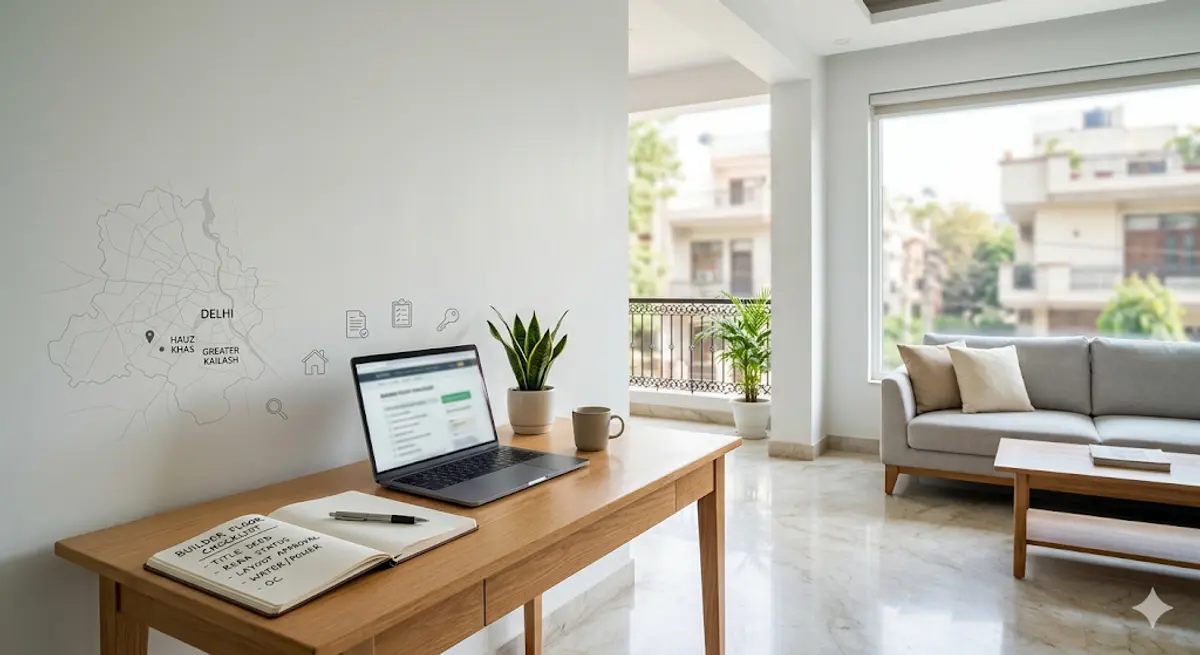
Builder Floor Checklist Delhi 2026 | What to Verify Before Buying
Builder Floor Checklist Delhi 2026 | What to Verify Before Buying
Builder Floors — Popular but Prone to Issues
Builder floors are a uniquely popular housing format in Delhi — independent floors in residential bungalows that have been subdivided and sold as separate units. While they offer more space, privacy, and a neighbourhood feel compared to high-rise apartments, they come with specific legal and structural risks that buyers must verify thoroughly.
Title and Ownership Verification
Verify the original land title through the Delhi government's DORIS portal. Ensure the seller has clear ownership of the specific floor being sold — not just the plot — as builder floor transactions often involve complex shared ownership of land.
In Delhi, land is typically freehold and shared equally among floor owners. The Sale Deed should clearly define the undivided share in land, built-up area, and exclusive use areas (terrace, parking) belonging to each floor.
Building Plan Approvals
Verify the sanctioned building plan from the Municipal Corporation of Delhi (MCD) or New Delhi Municipal Council (NDMC) depending on the location. The construction should conform to the approved plan without illegal extensions or additional floors.
Illegal construction is extremely common in Delhi's builder floor segment. Purchasing a floor with unauthorised construction creates significant legal risk — such properties can face sealing orders or demolition notices.
Structural Quality Assessment
Builder floors vary enormously in construction quality — from well-engineered RCC structures to shoddily built ones that use substandard materials. Engage a structural engineer for a physical assessment before committing to purchase, especially for buildings older than 15–20 years.
Check for visible structural defects: cracks in load-bearing walls, uneven floors, water seepage stains, and dampness. These can indicate deeper structural issues.
Shared Facilities and Co-owner Relations
Builder floors involve shared ownership of the plot and shared use of common infrastructure — entry gate, staircase, water tank, generator, etc. Poor relations between floor owners can significantly impact the quality of daily life.
Before purchasing, meet the existing floor owners. Understand the shared maintenance arrangement, how major repair costs are split, and whether there are any ongoing disputes between floor owners.
Conclusion
Builder floors in Delhi offer attractive value but require more thorough due diligence than apartment purchases. A combination of legal verification, structural assessment, and assessment of co-owner dynamics is essential before committing to a builder floor purchase.